Tag

qualified

Browsing

Cars rarely fail without warning. Subtle signs often appear long before a breakdown, and paying attention to them can save time, money and stress. From strange noises to dashboard lights, recognising when something isn’t right helps keep your car reliable, safe and performing at its best.

Signs Car Needs Mechanical Repairs

Unusual Noises

Grinding, squealing or knocking sounds can point to problems with the brakes, suspension or engine. These noises usually start softly before becoming louder as the issue worsens. Brake squeal often means worn pads or warped rotors. Knocking could suggest worn bearings or loose engine components. Catching these sounds early allows small parts to be replaced before they cause major damage.

Smoke from the Engine or Exhaust

Any smoke coming from under the bonnet or exhaust system is a clear warning sign. Blue smoke often indicates burning oil, white smoke suggests coolant entering the combustion chamber, and black smoke can point to excess fuel or a clogged air filter. Smoke may appear briefly at start-up, but persistent smoke signals a deeper issue that should be inspected straight away to prevent expensive repairs.

Warning Lights on the Dashboard

Modern vehicles rely on onboard sensors to track vital systems. The check engine light, oil pressure warning or battery indicator are designed to alert you before a failure occurs. Ignoring these lights allows hidden faults to worsen. Sometimes it’s as simple as a loose fuel cap, but repeated or flashing warnings can mean electrical faults, misfires or failing sensors that need diagnostic testing.

Specialist mechanic in Hornsby, Sydney Matt Gates explains that many of these issues start small, and booking a repair early can prevent expensive damage to vital components. Expert workshops can interpret diagnostic codes accurately, finding the source of the problem before it affects other systems.

Loss of Power or Poor Performance

A drop in acceleration, rough idling or hesitation under load often points to fuel, ignition or transmission issues. Problems like a clogged fuel filter, worn spark plugs or slipping clutch can reduce efficiency and cause further wear. Drivers should also look out for poor fuel economy or sluggish throttle response. Addressing these symptoms early prevents long-term strain on the engine and driveline.

Vibrations or Shaking

If you notice the steering wheel, seat or pedals vibrating while driving, there’s usually an imbalance or mechanical fault. Wheel misalignment, uneven tyre wear or damaged suspension components are common causes. Vibrations under braking can indicate warped rotors. Ignoring these signs can make handling unpredictable and compromise safety, especially at highway speeds.

Fluid Leaks

Leaks beneath your car are never normal and should be investigated promptly. Each type of fluid tells its own story:

  • Brown or black oil under the front may mean engine gasket failure.
  • Red fluid can indicate a transmission or power steering leak.
  • Green or orange coolant suggests a leaking radiator or water pump.
  • Clear fluid near the front wheels could mean brake fluid loss.

Even minor leaks can cause overheating or loss of hydraulic pressure, so they should always be checked by a qualified mechanic.

Difficulty Steering or Braking

If steering feels heavy, unresponsive or accompanied by whining noises, there may be low power steering fluid or a worn pump. A soft brake pedal or grinding noise while stopping points to worn pads or a fluid leak. Because these systems are essential for control and safety, any change in feel or response should be inspected immediately.

When to Take Action

Recognising these warning signs early is the best way to prevent small issues from turning into expensive repairs. Make a habit of listening to your car, checking the dashboard and inspecting the ground where you park. Routine servicing, diagnostic checks and timely mechanical attention will keep your vehicle safe, efficient and reliable for years to come. Being proactive about repairs not only protects your investment but also ensures every drive is smooth and stress-free.
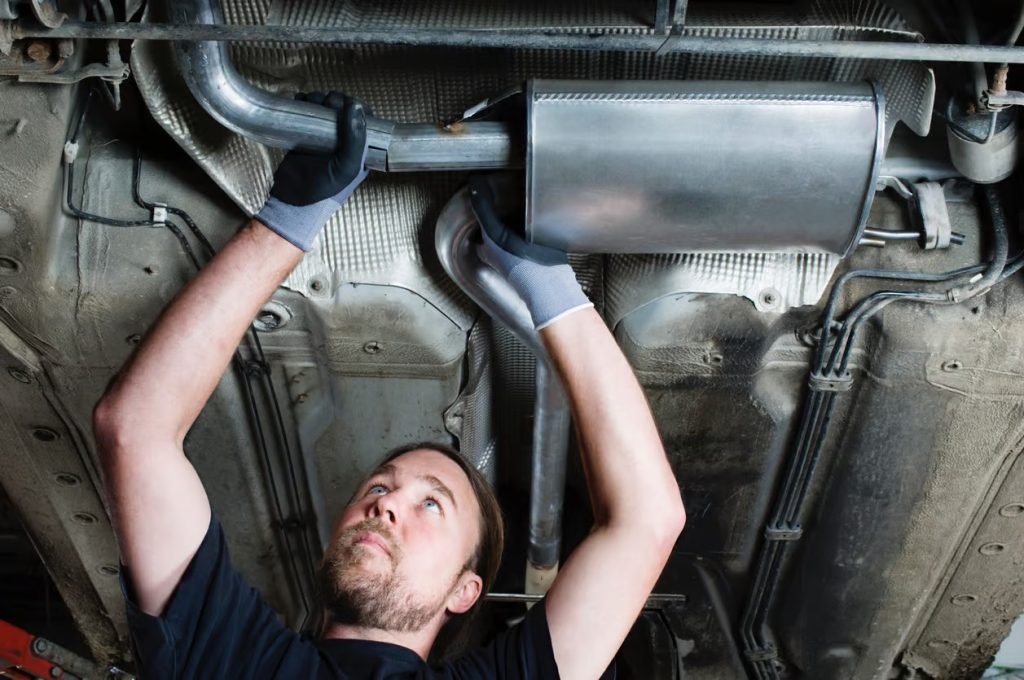

A rattling noise coming from your exhaust system can be a cause for concern. While it may seem like a minor annoyance, it can indicate deeper issues within the exhaust components, especially the catalytic converter. The noise is typically caused by loose or damaged internal parts, such as a broken or deteriorated catalytic converter substrate. Ignoring this sound can lead to further damage and costly repairs down the line, as internal parts may eventually break apart, obstructing the exhaust flow.

Possible Causes of the Rattle

The most common cause of a rattling noise from the exhaust system is a failing catalytic converter. Over time, the catalyst inside the converter, which is responsible for filtering harmful emissions, can degrade and break apart. This debris can rattle around inside the converter, causing the noise. Other causes include loose heat shields, damaged exhaust pipes, or issues with other components in the exhaust system, such as the muffler or exhaust manifold. Any of these problems can lead to further exhaust system malfunction if not addressed.

Impact on Engine Performance

A rattling catalytic converter or exhaust component can lead to significant engine performance issues. As internal parts of the converter break apart, debris can block the exhaust flow, increasing backpressure in the engine. This restriction can reduce engine efficiency, causing poor acceleration, decreased fuel economy, and even stalling. Ignoring these issues can not only lead to performance loss but also cause potential damage to the engine itself as the exhaust system works harder to push gases out. The Auto Repair in San Antonio, TX based services are quite important here.

Risks of Delaying Repairs

Delaying repairs when a rattling noise is heard from the exhaust system can lead to more severe consequences. If the damage is left unchecked, the internal parts of the converter or other components can cause total failure of the exhaust system, requiring a full replacement. In addition to the cost of repairs, ignoring a rattling noise could result in your vehicle failing an emissions test, leading to additional legal and financial complications. Furthermore, continued driving with a compromised exhaust system can affect the overall health of your engine.

When to Seek Professional Help

If you hear a rattling noise coming from your exhaust system, it’s essential to have it inspected by a professional mechanic as soon as possible. A qualified technician can diagnose the problem, identify the source of the noise, and recommend the necessary repairs. Early intervention can prevent more extensive damage to the exhaust system and engine, saving you money in the long run.

Conclusion:

A rattling noise from the exhaust system, particularly the catalytic converter, should never be ignored. It may signal internal damage that could lead to poor engine performance and expensive repairs if left unresolved. Early detection and professional inspection can save your vehicle from more severe damage and costly repairs.

Proper tire maintenance is crucial for ensuring the durability, performance, and safety of your vehicle. Disregarding tire degradation indicators can lead to significant financial repercussions and safety concerns while driving. The following are the five primary indicators suggesting that your tires may require professional repair services. Don’t jeopardize your security; continue to be watchful and proactive about tire health.

Disparity in Tread Wear

Irregular tread wear is a significant indicator that your tires may require attention and potential repair. The tread of a well-maintained tire ought to exhibit uniformity across its entirety. It may indicate misalignment or incorrect inflation if one side of the tire seems more worn than the other. Failure to address this uneven wear could lead to blowouts or further damage, in addition to diminishing traction. Regularly inspect for visible signs of wear or employ the penny test to assess the tread depth of your tires. It is essential to have your vehicle examined by a qualified professional should you observe any signs of irregular wear.

Tire Store

Driving-Related Vibrations

It is imperative to remain vigilant if you experience unusual sensations while operating a motor vehicle. Vibrations may signify a range of issues, including unbalanced tires, alignment concerns, or potential internal damage. While it is true that certain vibrations may occasionally stem from external factors such as balloons or potholes, persistent shaking in the seat or steering wheel could signify an underlying issue with your tires. Ignoring these signs might put you and other drivers in danger on the road by accelerating tire deterioration and impairing your car’s handling. Choosing the right Tire Store in Carthage, MO  based service is essential there.

Progressive Leaks

Checking your tire pressure on a regular basis will save you a lot of trouble in the future. It is possible to experience a slow leak if you notice that your tires consistently require air, despite the absence of any visible punctures. Numerous potential factors may contribute to this situation, including a subtle puncture that may not be readily apparent or a malfunctioning valve stem. Ignoring a gradual leak might lead to a flat tire and compromise your driving safety. Get your tires evaluated if you think there may be a gradual leak so that the problem may be quickly found and fixed.

Remarkable Blisters or Bulges

Bulges or blisters present on the side of your tires serve as significant warning signs that warrant immediate attention and should not be overlooked. The observed irregularities indicate a potential compromise in the tire’s internal structure, possibly stemming from manufacturing defects or impact-related damage. Blowouts represent a significant risk factor for bulging tires, potentially leading to serious accidents and a loss of control. It is imperative to replace your tires immediately upon noticing any blisters or bulges to ensure safety.

A Trucking Companies Worst Enemy (Themselves)

I’ve been driving professionally for fifteen years. I’ve labored as being a driver for owner operators to companies named within the top 50 company list. I have found some common deficiencies with trucking companies regardless of their size. These deficiencies For me personally take $ employing their earnings i can’t realise why without trying should improve it.

The styles that come up at motorists conferences would be the items that cost companies cash except I do not see anything across the front lines to show me everything is improving.

Administration takes step to relax trucker drive-time rules | |  register-herald.com

Communication:

Once the sales repetition/ customer service accumulates a foreign exchange account I have found the dispatchers have no idea the enter in the customer account to correctly dispatch equipment or motorists to satisfy totally free styles criteria. This will make delays, driver and customer dissatisfaction.

Dispatchers inclination to slack motorists the entire information on the get requiring the motive pressure to help keep calling to dispatch to learn more which frustrates the motive pressure, customer and dispatcher. They seem to not learn in trip routing. They think 20 miles is twenty minutes away.

New policies I’ve discovered are learned by hear say more the normal full out forwarding of notifications to everyone personnel. This will make a delay entirely implementation which frustrates personnel and could cause unnecessary incurred costs or inadequate accounts.

Getting less communication leads to staff not necessarily following company policy simply they do not be familiar with policies and they are left wondering why they’re being disciplined for something they weren’t conscious of.

Training:

The trucking industry talks our ears off about training. Why then is niagra among the top insufficient our industry. Not once within my fifteen years have I received a person review or offered training.

NSC SAFETY PLAN – Motorists

You result in all motorists while they’re operating any commercial vehicles through your NSC number. You’ll need to ensure that the motorists are qualified and trained. If you’re a person for your business you have to keep records on yourself whenever you would every other driver. You’ll meet NSC needs within the “motorists” category by:

Supply Chains Latest: U.S. Truckers Battle Multiple Headwinds. - Bloomberg

Ensuring QUALIFICATIONS

acquiring a person record when hiring motorists

ensuring the motorists are qualified and trained when hired

ensuring driver qualifications are maintained including reference checks and past employment performance

in your candidate shopping process ensuring motorists understand NSC safety standards.