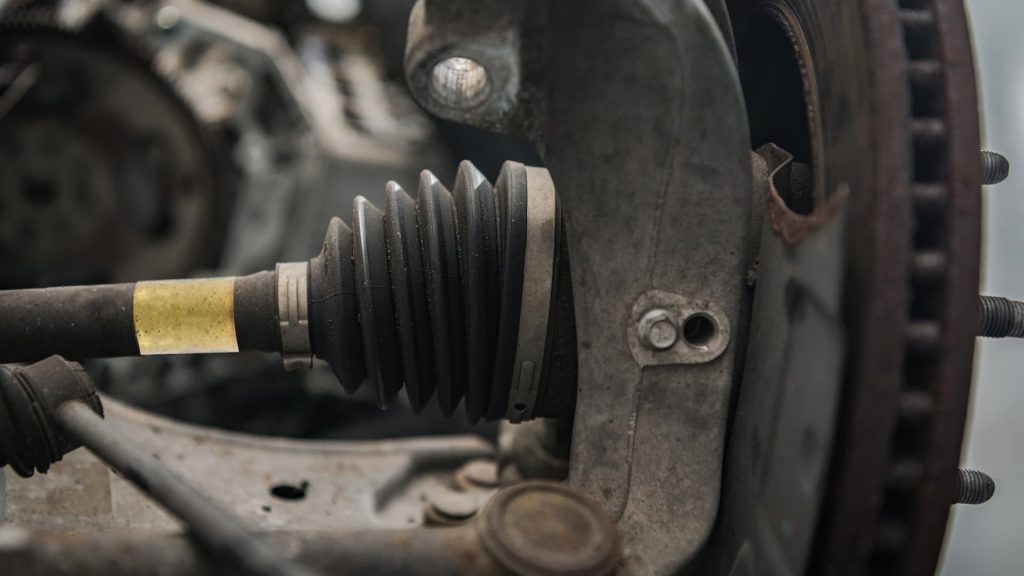
CV joints transfer power from the transmission to wheels. Worn suspension parts change angles and stress joints repeatedly. Understanding suspension impact improves maintenance and vehicle reliability effectively. Proper care preserves joint integrity and prevents unexpected breakdowns consistently. Acting promptly ensures predictable steering response and smooth driveline operation. Suspension health is critical for reliable CV joint performance consistently. Driving safely and maintaining components prolongs CV joint lifespan effectively.
Control Arm Wear
Worn control arms allow excessive movement in suspension repeatedly. Increased movement alters CV joint angles during cornering and braking continuously. Bearings and cages experience added stress and accelerated wear immediately. Mechanics inspect control arms and bushings to ensure proper function carefully. Replacing damaged control arms restores suspension geometry and torque transfer reliably. Healthy joints rotate smoothly and absorb road stress predictably without vibration. Ignoring control arm wear accelerates CV joint deterioration and produces noise. Proper control arm maintenance prevents binding clunking and unpredictable steering response consistently.
Shock Absorber Problems
Weak or leaking shocks reduce suspension damping and increase joint stress. Excessive movement produces shock loads transferred through the CV joint repeatedly. Inner and outer joints experience friction and axial loading beyond tolerance. Mechanics check shocks for leaks bounce and damping response regularly. Replacing faulty shocks restores smooth suspension motion and protects joint components. Healthy CV joints absorb driving stress without producing unusual noise or vibration. Ignoring shock problems accelerates wear and may lead to sudden joint failure.
Spring Fatigue
Sagging or broken springs change ride height and axle angles subtly. Altered angles place uneven load on CV joints during acceleration and turning. Bearings and cages experience additional friction producing heat and gradual wear. Mechanics measure ride height and inspect springs for cracks and sag carefully. Replacing fatigued springs restores proper suspension geometry and torque transfer efficiency. Healthy CV joints maintain smooth motion and reduce vibration consistently. Ignoring spring fatigue increases lateral stress and accelerates joint deterioration. Maintaining proper spring function preserves driveline stability and prevents unexpected failure. Springs play a key role in maintaining CV joint alignment reliably.
Bushing Deterioration
Suspension bushings cushion movement and reduce stress on connected joints. Worn bushings allow extra movement altering CV joint angles repeatedly. Misalignment produces binding vibration and uneven torque transfer during driving. Mechanics at Auto Repair in Columbus, NE inspect bushings visually and by moving suspension components carefully. Replacing deteriorated bushings restores geometry and smooth torque delivery reliably. Healthy bushings absorb shocks and prevent premature wear on CV components. Ignoring bushing deterioration increases friction and may produce clunking or binding.
Conclusion
Suspension issues place additional stress on CV joints consistently and repeatedly. Worn control arms shocks springs or bushings alter angles and increase wear. Damaged joints reduce torque transfer produce vibration and risk sudden failure. Early inspection prevents secondary drivetrain damage and restores smooth operation. Repair or replacement ensures consistent torque delivery and reliable vehicle control.